
Getting arrested is scary. Whether it’s you or someone you care about, the first thought is usually: how do I get out? That’s where bail comes in, and more importantly, where a good Bail Lawyer in Lucknow becomes essential.
What is Bail?
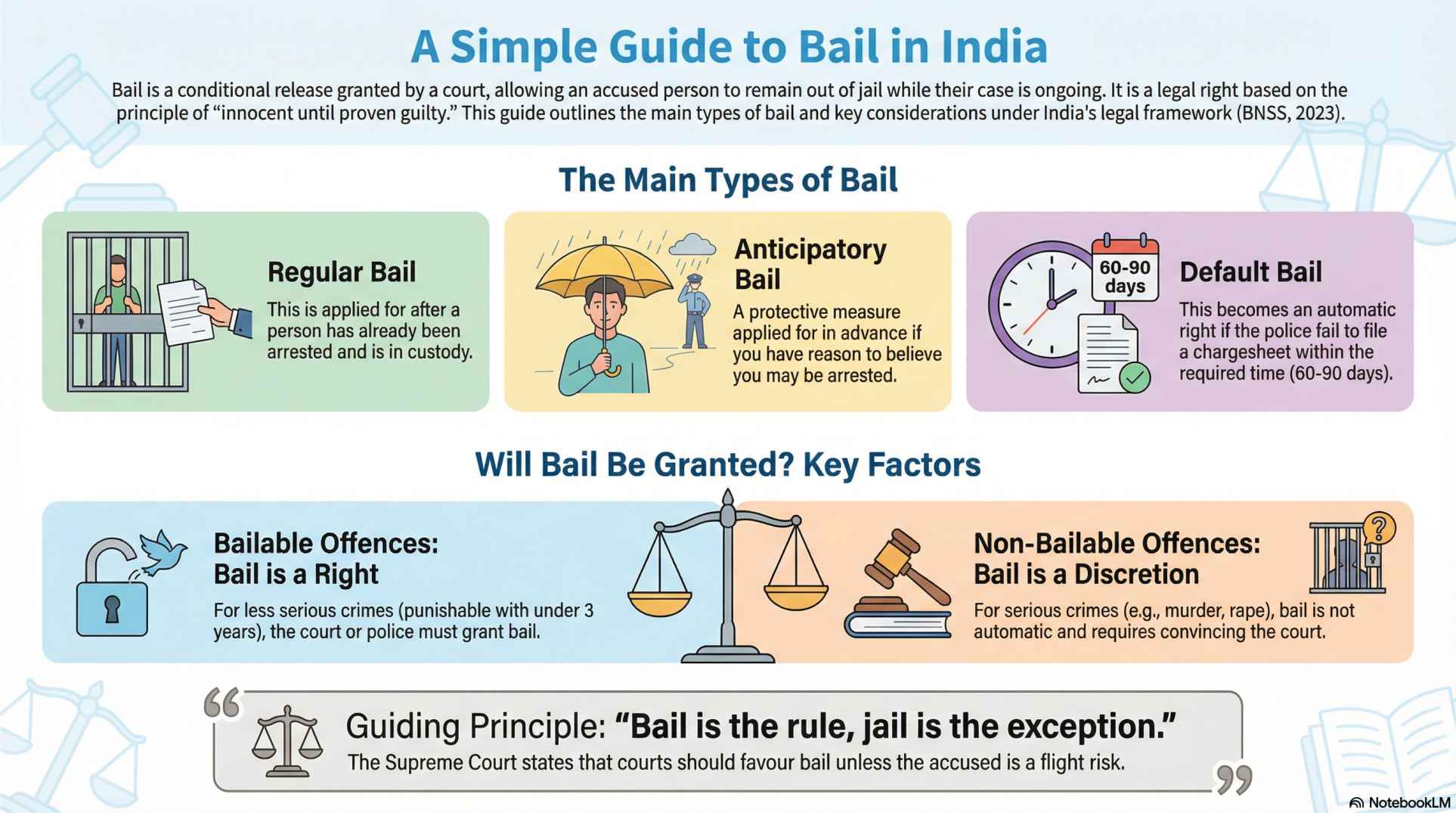
Bail is basically the court’s way of letting you stay out of jail while your case is being heard. It’s a legal right that says you don’t have to sit in custody just because you’ve been accused of something. After all, you’re innocent until proven guilty.
Think of it as the court’s promise system. You promise to show up for all your hearings, and in return, they let you go home. Sometimes you pay money as security, sometimes you don’t. It depends on your case.
Types of Bail in India
Indian law recognizes several types of bail under the Bharatiya Nagarik Suraksha Sanhita, 2023 (BNSS):
Regular Bail: This is what you apply for after you’ve already been arrested and are in custody. You file this in the Sessions Court or High Court under Section 483 BNSS (previously Section 439 CrPC).
Anticipatory Bail: If you think you might get arrested, you apply for this beforehand. It’s like protection in advance. Section 482 BNSS (old Section 438 CrPC) covers Anticipatory Bail.
Interim Bail: This is temporary bail, usually given for a short period while your main bail application is being decided.
Default Bail or Statutory Bail: If the police don’t file a chargesheet within the time limit (60 or 90 days depending on the offense), you can get bail automatically under Section 167(2) BNSS (previously Section 167(2) CrPC).
Who is a Bail Lawyer?
A bail lawyer (or bail advocate) is a criminal defense lawyer who specializes in getting people released from custody. They know the ins and outs of bail law and can present your case in the strongest way possible.
In Lucknow, you’ll find bail lawyers practicing in various courts – from the district court to the Allahabad High Court’s Lucknow Bench. A High Court bail advocate in Lucknow handles more serious cases where lower courts have rejected bail.
When Can You Apply for Bail?
You can apply for bail at different stages:
- Right after arrest (within 24 hours as per Section 479 BNSS)
- After being produced before a magistrate
- During investigation or trial
- After conviction (though this is rare)
- Before arrest (anticipatory bail under Section 482 BNSS)
The timing matters. A skilled bail lawyer in Lucknow will know exactly when to file your application for the best chance of success.
In Which Cases Can Bail Be Applied?
Here’s where it gets interesting. Not all cases are treated equally.
Bailable Offenses: These are less serious crimes where bail is your right. The police or court must grant it. Think offenses punishable with less than 3 years imprisonment under the Bharatiya Nyaya Sanhita, 2023 (BNS).
Examples include:
- Simple hurt under Section 115 BNS (old IPC 323)
- Assault under Section 131 BNS (old IPC 352)
- Theft under Rs 5,000 under Section 303(2) BNS (old IPC 379)
- Criminal trespass under Section 329 BNS (old IPC 447)
- Defamation under Section 356 BNS (old IPC 500)
Generally, offenses punishable with less than 3 years imprisonment or only with fine fall under this category.
Non-Bailable Offenses: More serious crimes like murder under Section 103 BNS (old Section 302 IPC), rape under Section 64 BNS (old Section 376 IPC), or drug trafficking under NDPS Act. Here, bail isn’t automatic. You need to convince the court. This is where having a good bail advocate in Lucknow becomes critical.
Examples include:
- Murder under Section 103 BNS (old IPC 302)
- Rape under Section 64 BNS (old IPC 376)
- Kidnapping under Section 137-140 BNS (old IPC 363-366)
- Robbery under Section 309 BNS (old IPC 392)
- Dowry death under Section 80 BNS (old IPC 304B)
- Drug trafficking under NDPS Act
Family cases involve both bailable (less serious, right to bail) and non-bailable (serious, court discretion) offenses, depending on the specific alleged crime; for example, petty domestic disputes might be bailable, while dowry death or grievous assault (often family-related) are non-bailable, meaning bail isn’t automatic and depends on court discretion.
Cognizable vs Non-Cognizable Offenses
This classification affects how police handle your case:
Cognizable Offenses: Police can arrest without a warrant. These are usually serious crimes. Most non-bailable offenses are cognizable.
Non-Cognizable Offenses: Police need a warrant to arrest. These are generally less serious. Examples include assault without serious injury, defamation, and public nuisance under Section 292 BNS (old IPC 268).
Special Considerations (as per latest Indian law):
Under Section 479 BNSS (previously Section 437 CrPC):
- If you’ve already spent half the maximum sentence period in custody, you may get bail
- First-time offenders get more consideration
- Your age, health, and family situation matter
- Whether you’ll tamper with evidence or influence witnesses
Under Section 480 BNSS (old Section 437A CrPC):
- Even in serious offenses, bail can be granted if the investigation isn’t completed in time
- Courts consider the nature of accusations and evidence
Section 483 BNSS (previously Section 439 CrPC) allows High Court and Sessions Court to grant bail even in cases where Magistrate Court has refused.
The Supreme Court has also said that bail is the rule, jail is the exception. Courts look at whether you’re a flight risk, might commit more crimes, or could influence the case.
Key Provisions Under BNS for Bail Matters
Understanding which BNS sections apply to your case helps:
- Section 103 BNS (Murder – old IPC 302): Non-bailable, needs strong grounds
- Section 64-70 BNS (Sexual offenses – old IPC 376): Strict bail conditions
- Section 303-305 BNS (Theft – old IPC 379-381): Often bailable depending on value
- Section 115 BNS (Voluntarily causing hurt – old IPC 323): Usually bailable
- Section 351-352 BNS (Criminal breach of trust – old IPC 405-406): Depends on amount involved
Why You Need a Bail Lawyer in Lucknow
Here’s the truth: bail applications are technical. One wrong argument and you’re stuck inside. A bail lawyer in Lucknow High Court understands what works in UP courts, and can draft applications that actually get results.
They’ll:
- Draft a strong bail application under BNSS provisions
- Gather supporting documents
- Present compelling arguments in court
- Handle objections from the prosecution
- Follow up if needed in higher courts
- File appeals under Section 483 BNSS if lower court rejects bail
Looking for the Best Bail Advocate in Lucknow?
Our team has successfully handled hundreds of bail matters in Lucknow’s courts, from district level to High Court. Whether you need urgent bail assistance under BNSS provisions or anticipatory bail consultation, we’re here to help.
With years of experience in criminal defense and deep legal knowledge, Royal Litigators team provide expert legal representation when you need it most.Contact Royal Litigators, experienced bail lawyers who’ve successfully handled hundreds of bail matters in Lucknow’s courts, from district level to High Court. Whether you need urgent bail assistance under BNSS provisions or anticipatory bail consultation, we’re here to help.
Don’t let procedural delays keep you or your loved ones in custody longer than necessary. Call Royal Litigators today for expert bail representation in Lucknow.
Frequently Asked Questions
Q: How long does it take to get bail in Lucknow?
It varies. Regular bail under Section 483 BNSS can take 2-7 days. Anticipatory bail under Section 482 BNSS might take 1-3 weeks. Emergency bail can be arranged within hours in urgent cases.
Q: What’s the cost of hiring a bail lawyer in Lucknow?
Fees depend on the case complexity and court level. District court bail matters cost less than High Court bail cases. Most lawyers offer consultation to discuss fees upfront.
Q: Can I get bail in a murder case under Section 103 BNS?
Yes, it’s possible but difficult. Section 480 BNSS allows bail even in serious offenses if certain conditions are met. An experienced High Court bail lawyer in Lucknow can evaluate your chances.
Q: What documents do I need for bail?
Typically: FIR copy, case details, identity proof, address proof, character certificates, and any documents supporting your case. Your bail advocate will guide you on specific requirements.
Q: Will I get bail if I’m a first-time offender?
Being a first-time offender helps your case significantly under Section 479 BNSS. Courts are more lenient with people who have no criminal history.
Q: Can bail be rejected?
Yes. If rejected by a lower court, you can approach the High Court under Section 483 BNSS (old Section 439 CrPC). That’s when you need a bail lawyer in Allahabad High Court Lucknow bench who handles such appeals.
Q: What happens if I violate bail conditions under BNSS?
Your bail can be cancelled under Section 484 BNSS (old Section 439 CrPC) and you’ll be sent back to custody. That’s why it’s important to follow all conditions strictly.
Q: What’s the difference between BNSS and old CrPC for bail?
BNSS 2023 replaced CrPC from July 1, 2024. The basic bail principles remain the same, but section numbers have changed. Section 479 BNSS = old 437 CrPC, Section 482 BNSS = old 438 CrPC, Section 483 BNSS = old 439 CrPC.